When the Ground Shifts Beneath Our Schools: What Every Texas Family Needs to Know Right Now
By Dr. Andrea Long-Nelson | B.E.A.M. Education | beameducation.org
There's a significant shift happening in Texas public education, and if you're a parent, a teacher, or a community member who cares about where children learn — you need to know what's happening.
Recent reporting from San Antonio reveals what many education advocates have been observing for some time: the future of public schooling in Texas is uncertain, and the policy decisions being made right now will directly affect families across the state for years to come. Communities that are already navigating under-resourced schools — including Black families, low-income households, and rural communities — will likely feel the impact first and most acutely.
At B.E.A.M. Education, our mission is clear: we are here for our families and our children through every educational option available to them. That means we don't sidestep hard conversations. We have them — clearly, honestly, and with deep respect for the diversity of perspectives that exist within our communities. Every family deserves the full picture so they can make the most informed decisions possible for their children.
What's Happening in Texas Right Now
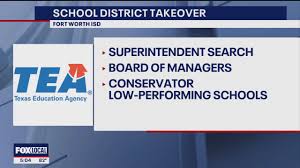
The Texas Education Agency (TEA) has announced plans to take over four public school districts this year — Beaumont ISD, Connally ISD, Lake Worth ISD, and Fort Worth ISD — citing low academic performance. San Antonio ISD, which is facing a significant budget deficit, is also on the edge of a potential state takeover depending on this year's STAAR test outcomes.
At the same time, Texas Attorney General Ken Paxton launched investigations into several school districts — including San Antonio's North East Independent School District (NEISD) — following student walkouts. The investigation centers on whether school officials approved or facilitated those protests. Teachers union officials in NEISD have stated that student safety was prioritized and all protocols were followed.
Layered on top of all of this, Texas lawmakers last year approved a school voucher program — now functioning through the Texas Education Freedom Account (TEFA) framework — that allocates $10,000 per student to approximately 100,000 families to use toward private school tuition and qualifying educational expenses.
Each of these developments raises real questions for families across the state, and understanding how they connect matters.
The Funding Picture Every Parent Should Understand
Here is a number worth sitting with: Texas currently spends roughly $4,000 less per student than the national average on public education.
Since Governor Greg Abbott first took office in 2015, per-student spending has risen from approximately $11,000 to $15,000. On the surface, that sounds like growth. But with the national average considerably higher, Texas still ranks near the bottom among all states for public education investment, according to the Texas State Teachers Association.
During this same period, the STAAR test — the primary instrument used to evaluate school and district performance — was made significantly more difficult. Districts that receive failing grades on the state's accountability rating for five consecutive years become eligible for TEA takeover. The combination of reduced relative funding and a raised performance bar has created conditions that many educators say make it increasingly difficult for already under-resourced campuses to succeed.
State legislators on both sides of this debate acknowledge that funding is at the heart of the issue. For families, the practical takeaway is this: the schools your children attend are being evaluated against a standard that the state itself sets, using funds the state controls. Understanding that relationship is essential context for every conversation about school performance, accountability, and choice.
The Voucher Question: A Balanced Look at What TEFA Means for Families
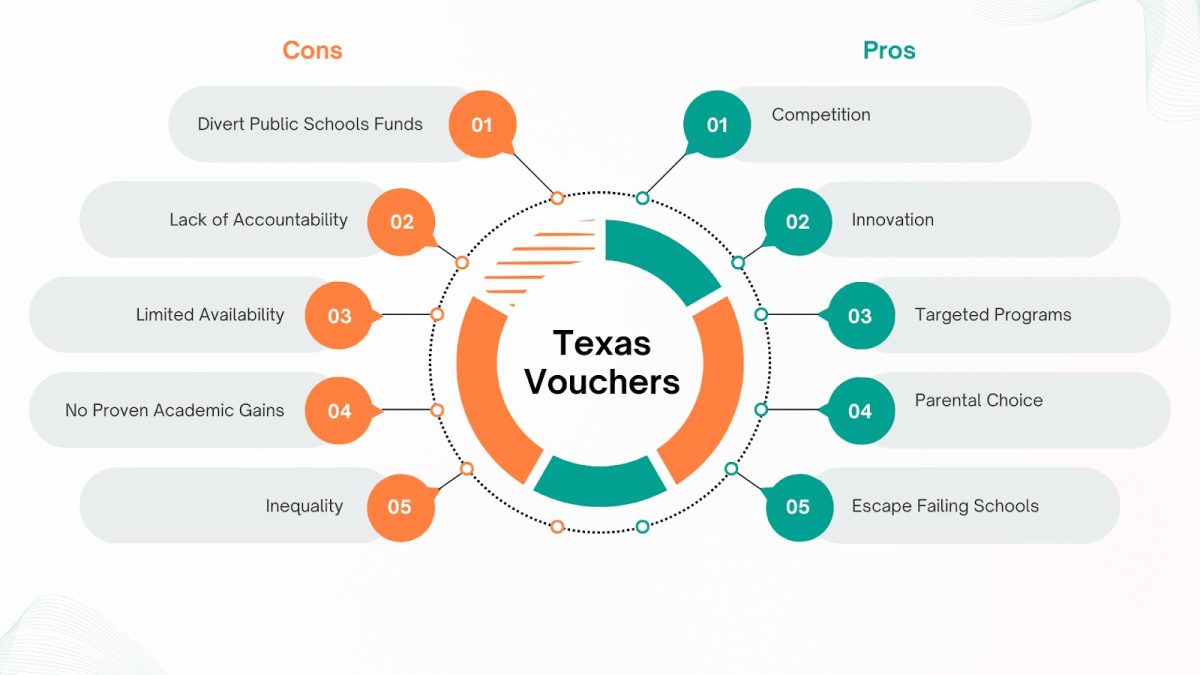
The Texas Education Freedom Account (TEFA) program is one of the most debated education policies in the state's recent history. Like most significant legislation, it carries both real opportunities and real risks — and families deserve an honest account of both.
Where TEFA Can Help
For families who have long wanted access to private, faith-based, or alternative education but couldn't afford it, the $10,000 account represents a genuine door opener. Parents who feel their child is not thriving in their assigned public school now have a funded mechanism to explore other settings — whether that's a private school, a microschool model, or a qualifying homeschool program.
For families whose children have unique learning needs that their current school is not equipped to meet, TEFA provides financial flexibility that simply didn't exist before. Families who qualify can direct those funds toward tuition, curriculum, tutoring, and other approved educational expenses — giving them a level of agency over their child's education that was previously reserved for those with greater financial resources.
TEFA also helps validate alternative education models — including community microschools like the one B.E.A.M. is developing — as legitimate, funded options within the educational ecosystem. For families interested in a more culturally affirming, individualized learning environment, this matters.
Where TEFA Creates Challenges
The concerns around TEFA are equally worth naming clearly.
The $10,000 allotment does not cover the full tuition cost at most private schools. For families living paycheck to paycheck, a significant gap may remain — one that makes the voucher feel more like a partial offset than a true choice. Experts and lawmakers have noted that the program disproportionately benefits families who were already considering private education and have the financial means to bridge the remaining cost.
Public school funding in Texas is enrollment-based. Every student who exits a public school carries funding out with them. For districts already operating under financial strain — particularly those serving predominantly Black, Latino, and low-income communities — a sustained enrollment decline does not just mean fewer students. It can mean fewer teachers, fewer programs, and in some cases, school closures that reshape entire neighborhoods.
Rural communities face a version of this challenge that is especially acute. For a family in a small town where the nearest private school is an hour away and transportation is not guaranteed, a $10,000 account may exist on paper but not be accessible in practice. Critics of the program argue that for rural families, it offers a theoretical choice while simultaneously pulling funding from the only school actually available to them.
There are also questions about accountability. Private schools that accept TEFA-funded students are not subject to the same reporting requirements, academic standards, or civil rights protections that govern public schools. For families accustomed to the oversight structures of public education, this is worth factoring into any decision.
Finally, the long-term financial impact on the public system is a concern that extends beyond any individual family's choice. As more students leave, public schools lose not only enrollment dollars but also the community investment that sustains them. For the families who remain in public schools — which will continue to be the majority — the ripple effects of a shrinking enrollment base are real and deserve honest conversation.
What This Means for the Families B.E.A.M. Serves
B.E.A.M. Education was built with a specific commitment: to serve as an educational and legacy voice for the Black community in the United States, grounded in the full breadth of Black history — including contributions that have been minimized or overlooked.
That commitment makes this moment significant for us.
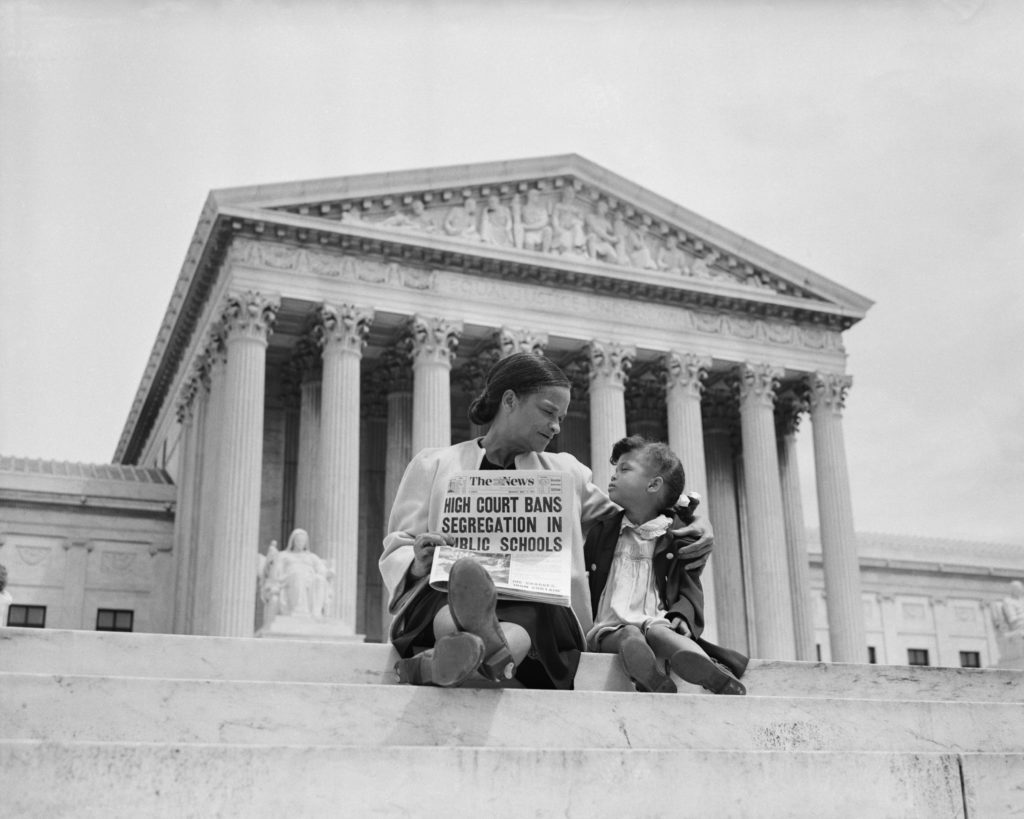
Historically, public schools have been the primary educational institution for Black children in America. And historically, the disruption of those schools — through underfunding, policy restructuring, and administrative takeovers — has fallen hardest on Black families and communities. That history does not determine the future, but it deserves acknowledgment as we navigate the present.
At the same time, the expansion of educational options through programs like TEFA represents a real opportunity for families who want something different — and we fully support families who choose to use those options. Our role is not to direct that choice. Our role is to make sure every family we serve has what they need to make it confidently.
Whether your child is thriving in a public school and you want to protect that, or you're considering an alternative setting and want to understand your options, or you're somewhere in the middle trying to figure out what the right next step looks like — B.E.A.M. is here for that conversation.
Be Informed, Be Equipped, Be Present
What's unfolding in Texas right now is a reminder that education policy is never abstract. It is always, ultimately, about children. About classrooms. About the communities that gather around those classrooms and the futures they are working to build.
Regardless of where you stand on vouchers, state takeovers, or educational choice, one thing remains constant: your family deserves to be informed, equipped, and supported — through whatever landscape your child's education occupies.
That is the promise B.E.A.M. Education makes to every family we serve.
We are building B.E.A.M. Microschool Academy as a September 2026 community-anchored educational option for families in the Dallas area ready to explore a new kind of learning environment — one grounded in cultural affirmation, academic excellence, and whole-child development. We provide teacher and staff training, AI literacy, and youth entrepreneurship programs for schools and organizations across the full educational spectrum. We work with public, private, and charter schools — because children don't belong to a system. They belong to families.
And families deserve a partner who will walk with them through all of it.
Your Next Step
If you have questions about Texas Education Freedom Account (TEFA) eligibility, what a state takeover might mean for your child's school, or how to explore educational options in the DFW area — reach out to us directly.
We are not here to tell you what to think. We are here to make sure you have everything you need to think clearly.
Visit us at beameducation.org | beammicroschool.org | Call: 888-433-1278
B.E.A.M. Education — Making a Difference While Making a Living.


