When AI Does the Thinking for Our Children, Who Are We Really Educating?
A B.E.A.M. Perspective on OpenAI's New Learning Framework — and What It Still Gets Wrong
By Dr. Andrea Long-Nelson | B.E.A.M. Ecosystem
There's a question quietly circulating in the halls of education policy, school board meetings, and now the research divisions of the world's largest AI companies: Is artificial intelligence actually helping students learn, or is it thinking for them?
This month, OpenAI took a significant step toward answering that question. The company unveiled its Learning Outcomes Measurement Suite — a new framework designed to track whether student use of ChatGPT builds or erodes deeper cognitive skills like persistence, motivation, and creative problem-solving. The framework monitors how learners interact with the AI over time and measures which cognitive outcomes actually change as a result.
It's a meaningful move. But it also reveals something important — something that educators who work on the front lines of underserved communities have known for a long time: measuring outcomes is only powerful if you already know what kind of human being you're trying to develop.
The Right Question, Asked a Little Late
To be fair, OpenAI deserves acknowledgment for asking the question at all. Just a few years ago, most schools were outright banning ChatGPT. Today, institutions from the University of Colorado to school districts across the country are signing multi-million dollar agreements to provide AI access to students and staff at scale.
The shift has happened fast. And when shifts happen fast in education, it's usually our most vulnerable students — Black children, low-income learners, those in under-resourced schools — who feel the consequences of decisions made without them in mind.
So when OpenAI states in its framework documentation that "what really matters is whether the gains and associated productive behaviors remain durable," I agree with the sentiment. But I have to ask: durable for what purpose? Durable toward whose vision of success?
This is the question B.E.A.M. was built to answer.
Cognitive Skills Are the Floor, Not the Ceiling
OpenAI's new study mode and measurement suite are focused largely on cognitive outcomes — persistence, motivation, problem-solving. These matter. But they represent only one dimension of what a fully developed young person looks like.
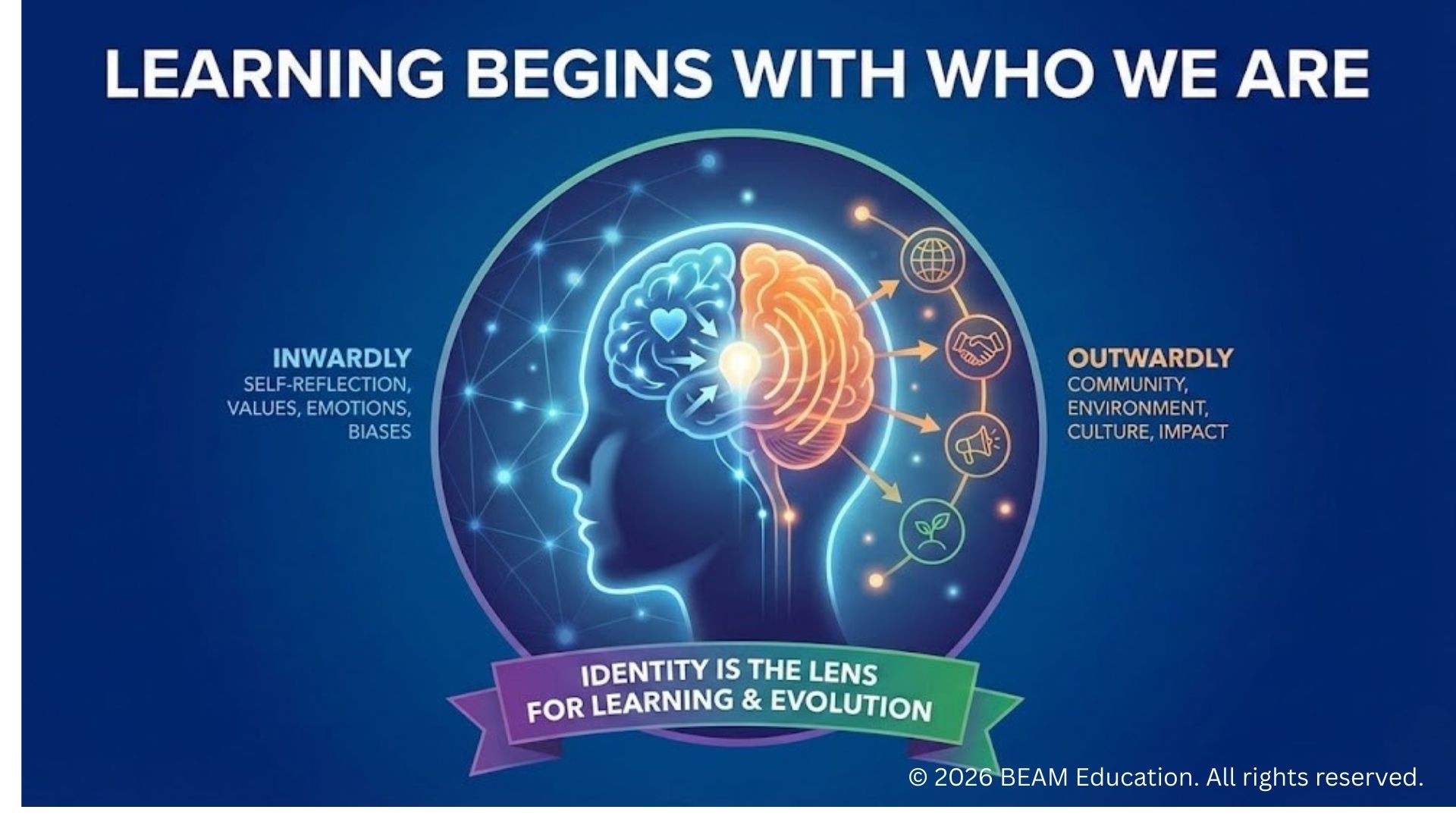
At B.E.A.M., our Synergy Framework operates across four interconnected pillars: culture, instruction, data, and team effectiveness. Notice what comes first — culture. Not test scores. Not cognitive performance metrics. Culture.
Because before a child can persist through a hard math problem, they need to believe their mind is worth investing in. Before they can think creatively, they need to have experienced what it feels like to be seen, affirmed, and challenged in equal measure. Before AI can serve as a meaningful learning tool, a child needs an educational environment where they understand who they are and why their learning matters.
No algorithm measures that. And no chatbot can build it.
This is why B.E.A.M. Microschool Academy — opening in September 2026 in partnership with New Covenant Christian Fellowship Church in Dallas — is not simply adding AI tools to a traditional classroom model. We are building a learning ecosystem where AI serves the student, not the other way around.
The Equity Gap Inside the AI Classroom
Here's something the headlines don't always capture: access to AI tools is not the same as equity in education.
OpenAI's head of education has spoken about AI's potential to "close the gap between those with access to learning resources and high-quality education and those who have been historically left behind." That framing is well-intentioned, but it carries a risk.
When we frame AI as the equalizer, we often skip the harder conversation — about the human infrastructure required for that equalization to actually occur. A Black child in an under-resourced school, handed a ChatGPT subscription without trained teachers, culturally affirming curriculum, and consistent community support, is not experiencing equity. They are experiencing digital exposure without educational transformation.
The difference between those two things is the B.E.A.M. difference.
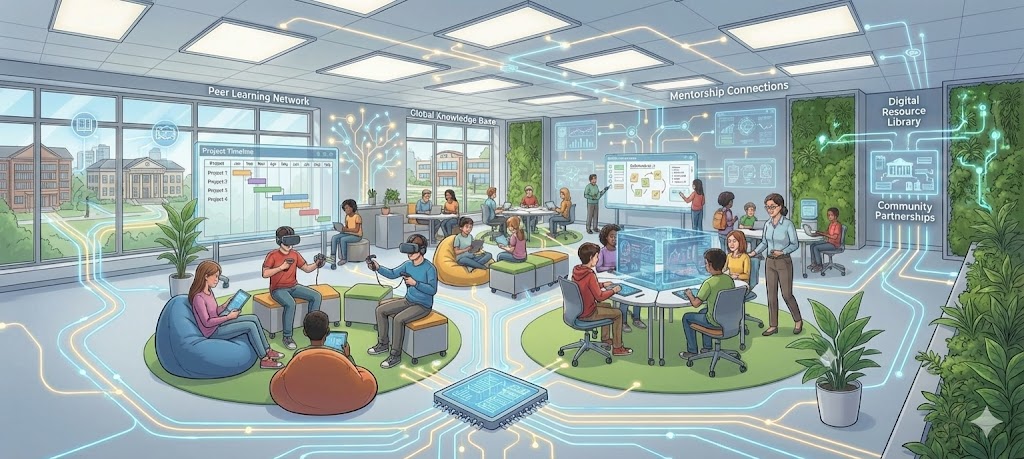
Our work with schools — public, private, charter, and now microschool — has always centered on building the conditions under which technology can serve as an amplifier of great teaching, not a replacement for it. Our professional development for educators is designed to ensure that when AI tools enter the classroom, teachers are equipped to use them with intention, cultural competence, and pedagogical purpose.
What the Data Can't Capture About Our Children
OpenAI's Learning Outcomes Measurement Suite tracks persistence, motivation, and creative problem-solving. These are real, important outcomes. But let me offer a few things that framework cannot measure — things we track in every B.E.A.M. ecosystem:
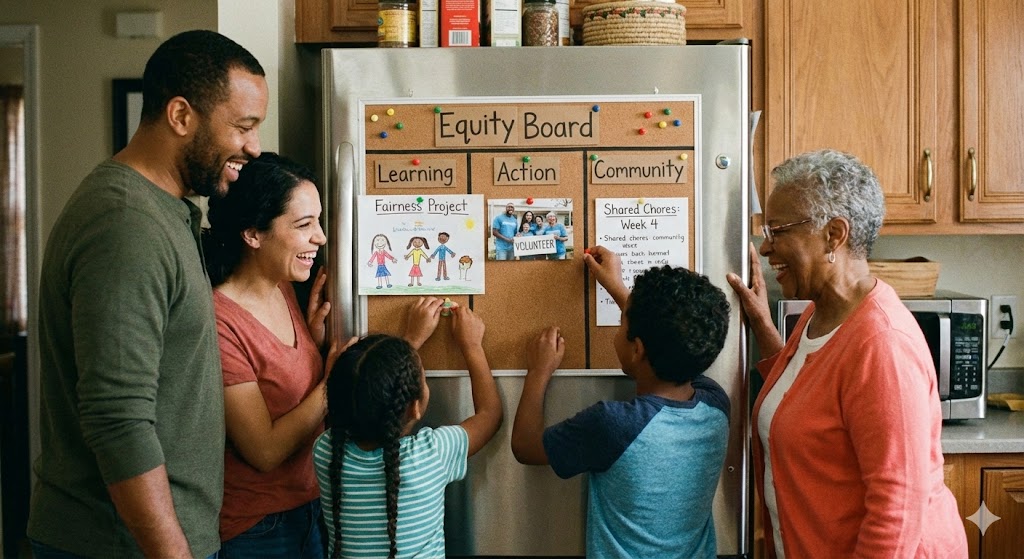
Identity affirmation. Does a child recognize their own history, culture, and lineage in what they are being taught? Do they see themselves as contributors to knowledge, not just consumers of it?
Community contribution. Is a young person developing a sense of responsibility to something larger than themselves? Are they growing into citizens, leaders, and change-makers?
Critical consciousness. Can a student examine information — including AI-generated information — with a discerning, questioning mind? Do they understand the difference between intelligence and wisdom?
Joy in learning. Not engagement metrics. Not time-on-task data. Genuine, embodied joy — the kind that keeps a child curious long after the test is over and the app is closed.
These outcomes are what we are building toward at B.E.A.M. And they require far more than a measurement suite. They require a movement.
A Word to Families Considering B.E.A.M. Microschool Academy
If you are a Black family in the Dallas area evaluating educational options for your child — and if you are watching the AI conversation in education with cautious curiosity — I want you to know that B.E.A.M. Microschool Academy is being built with your questions in mind.
We are not anti-technology. We are pro-child. And in our ecosystem, those two things must always be in that order.
B.E.A.M. Microschool Academy will offer AI literacy as part of a broader commitment to preparing students for futures we cannot yet fully imagine — while ensuring they are grounded in the identity, community, and critical thinking skills that no algorithm can provide.
Texas Education Freedom Account (TEFA) funding may be available to help eligible families access our program. We encourage every family to explore what is possible and to be in conversation with us before decisions are made.
You can reach us at beammicroschool.org or by calling 888-433-1278.
The Invitation
OpenAI's investment in measuring cognitive outcomes is a step in the right direction. We need the entire education ecosystem — AI companies, school districts, policymakers, and community-based organizations like B.E.A.M. — to ask harder questions, more often, and to include the communities most affected by the answers.
The question is never simply "Did the AI help the student learn?"
The deeper question is: "Learn to become what?"
At B.E.A.M., we know the answer. And we are building the space where that answer comes to life — one student, one family, one community at a time.
Dr. Andrea Long-Nelson is the founder of the B.E.A.M. Movement and lead architect of the Synergy Framework. B.E.A.M. Microschool Academy is set to open in September 2026 at 2025 W. Wheatland Rd., Dallas, TX, in partnership with New Covenant Christian Fellowship Church. For more information, visit beammicroschool.org.
Tags: Education | AI in Education | B.E.A.M. Movement | Equity in Education | Microschool | Collective Ecosystem | Black Education | Student Agency | Learning Ecosystem | Community Partnership


