The Texas Voucher Lottery Is Filling Up — But Not With the Families It Was Supposed to Serve
Over 150,000 Texas families have applied for the Texas Education Freedom Accounts (TEFA) program since the application window opened on February 4, 2026 — making it the largest first-year school choice launch in United States history. Governor Greg Abbott and Acting Comptroller Kelly Hancock celebrated the milestone as proof that Texas families overwhelmingly want school choice. And on the surface, who could argue?
But here at B.E.A.M. Education, we read the fine print. We always do.
Because the deeper story — the one buried beneath the headlines — is that the very families this program was advertised to help may be the least likely to benefit from it. And if our community doesn't act before March 17, we will have watched a billion taxpayer dollars flow to families who were already doing just fine.
"The program may serve as more of a tax break for wealthier families." — Houston Public Media, citing the state's own fiscal analysis
The Lottery Is Tiered — And the Tiers Matter
Let's be direct: the TEFA lottery is not random. It is tiered. And while the tiering is intended to prioritize low-income and disabled students, the structure contains a significant flaw that critics and researchers have been warning about since the bill was signed into law in May 2025.
Here is how the priority system works when applications exceed available funding:
1.Tier 1 — Students with disabilities from families earning up to 500% of the federal poverty level (roughly $160,000/year for a family of four)
2.Tier 2 — Students from families earning at or below 200% FPL (roughly $64,000/year)
3.Tier 3 — Students from families earning between 200% and 500% FPL
4.Tier 4 — All other families (no income ceiling) — capped at 20% of total TEFA funding
On paper, that sounds reasonable. In practice, the state's own fiscal analysis projects that 87% of TEFA applicants will be students who are already enrolled in private schools — families who, by definition, can already afford private education. Erin Baumgartner, director of the Houston Education Research Consortium at Rice University, put it plainly: the tiering "gives a lot of support to sort of middle- and middle- to upper-class families that maybe aren't getting the same sort of access for families who are closer to the poverty line."
Meanwhile, the average private school tuition in Houston sits near $28,000 per year. The TEFA award covers roughly $10,474. For a wealthy family whose child is already enrolled, this is a welcome subsidy. For a working-class Black family in South Dallas or West Arlington exploring private school for the first time, the math still doesn't work — and they face a timeline that penalizes anyone who isn't already inside the private school system.
The Timing Gap: A Barrier the Brochure Doesn't Mention
Here is the structural barrier that too few people are talking about. For the most competitive private schools, the enrollment timeline and the TEFA award timeline simply do not align. Most elite private schools required applications as early as January. Enrollment contracts and non-refundable deposits — sometimes totaling thousands of dollars — were due before March. But TEFA award notifications won't arrive until early April 2026.
Translation: to attend most private schools in fall 2026, families had to commit financially months before knowing whether they would receive voucher funding. For upper-income families, this is an inconvenience. For working families, it is a disqualifying barrier.
B.E.A.M. Insight: Families considering B.E.A.M. Microschool Academy for fall 2026 will not face this timing conflict. We are building our enrollment process around the TEFA award timeline precisely because we understand who our families are and what they need.

This Is a National Pattern — With a Racial Dimension
Texas did not invent this problem. It inherited it. Research documents what has happened in virtually every state that has adopted voucher-style programs: more than 60% of voucher recipients were families whose children had never attended a public school in the first place. In Arkansas and North Carolina, that figure approaches 92%.
The racial dimension is even more troubling. When North Carolina's voucher program launched in 2014, more than half of recipients were Black students. Today, that number has fallen to approximately 17%, as higher-income families have come to dominate the program. Private schools that were established during the desegregation era are now receiving millions in public voucher dollars — while remaining overwhelmingly white in majority-Black counties.
This is not an accident. It is a pattern. And B.E.A.M. Education exists, in part, because of patterns exactly like this one.
B.E.A.M.'s mission is to be an educational and legacy voice for the Black community — grounded in the unique perspective of Black history, including the contributions that have been forgotten or deliberately minimized.
When public dollars are extracted from public schools that serve predominantly Black and brown children — and redirected toward institutions that were never designed for those children — it is not school choice. It is school abandonment with a rebranding budget.
So What Does This Mean for Families Who Actually Need This Money?
It means you must apply now. The TEFA application window closes March 17, 2026, at 11:59 PM Central Time. The program is not first-come, first-served — so applying on March 16 carries the same weight as applying on February 4. What matters is that you apply.
If your household income is at or below $64,000 for a family of four, you are in Tier 2 — with priority over the vast majority of applicants. If your child has an IEP or a qualifying disability, you are in Tier 1 and may receive up to $30,000. You should absolutely apply.
And when you do, you need a school that was designed to receive you.
B.E.A.M. Microschool Academy: Built for This Moment
B.E.A.M. Education has partnered with New Covenant Christian Fellowship Church in Dallas to launch B.E.A.M. Microschool Academy in September 2026 — located at 2025 W. Wheatland Road, Dallas, Texas. Our Academy is being designed as a TEFA-eligible institution, meaning your voucher funds can be used toward enrollment from day one.
But we are not just TEFA-eligible. We are TEFA-intentional. Every program element we are building — from Dr. Long-Nelson's Synergy curriculum with its four pillars of culture, instruction, data, and team effectiveness, to our focus on AI literacy, youth entrepreneurship, and Black history — was designed for families that the traditional private school system has overlooked or priced out.
Dr. Long-Nelson brings to this work over 25 years of frontline educational leadership: a decade as a Dallas ISD principal, service as Assistant Superintendent of Instruction, leadership in professional learning and curriculum development, and the founding of B.E.A.M. Education in 2019. This is not theory. This is a practitioner who has turned around high-needs campuses and built the research-backed framework now powering our Academy.
While other private schools were designed to be supplemented by a voucher, B.E.A.M. Microschool Academy was designed for families whose primary pathway to private education is the voucher.
Action Item: Apply for TEFA at educationfreedom.texas.gov before March 17, 2026. Then contact B.E.A.M. Microschool Academy to begin the enrollment conversation. Call 888-433-1278 or visit beammicroschool.org.
The Bottom Line
Texas is spending one billion dollars on school choice. Some of that money will go to families who already had choices. That is a policy failure we cannot fix from the outside.
But what we can do is make sure that when the lottery runs, when the awards go out, and when the 2026-27 school year begins — the families who needed this program the most are enrolled in schools that were built for them, led by educators who look like them and believe in them, and grounded in a curriculum that tells the full truth of who they are and what they are capable of.
To borrow Dr. Long-Nelson's guiding question: If not us, then who? If not now, then when?
The application deadline is March 17. Do not let it pass.
About B.E.A.M. Education
B.E.A.M. Education (Building Educational Achievement with Meaning) is an educational consulting and microschool organization based in the Dallas-Fort Worth area. Our mission is to be an educational and legacy voice for the Black community in the United States. Learn more at beameducation.org or contact us at 888-433-1278.
TEFA Application Deadline: March 17, 2026 | Apply at educationfreedom.texas.gov
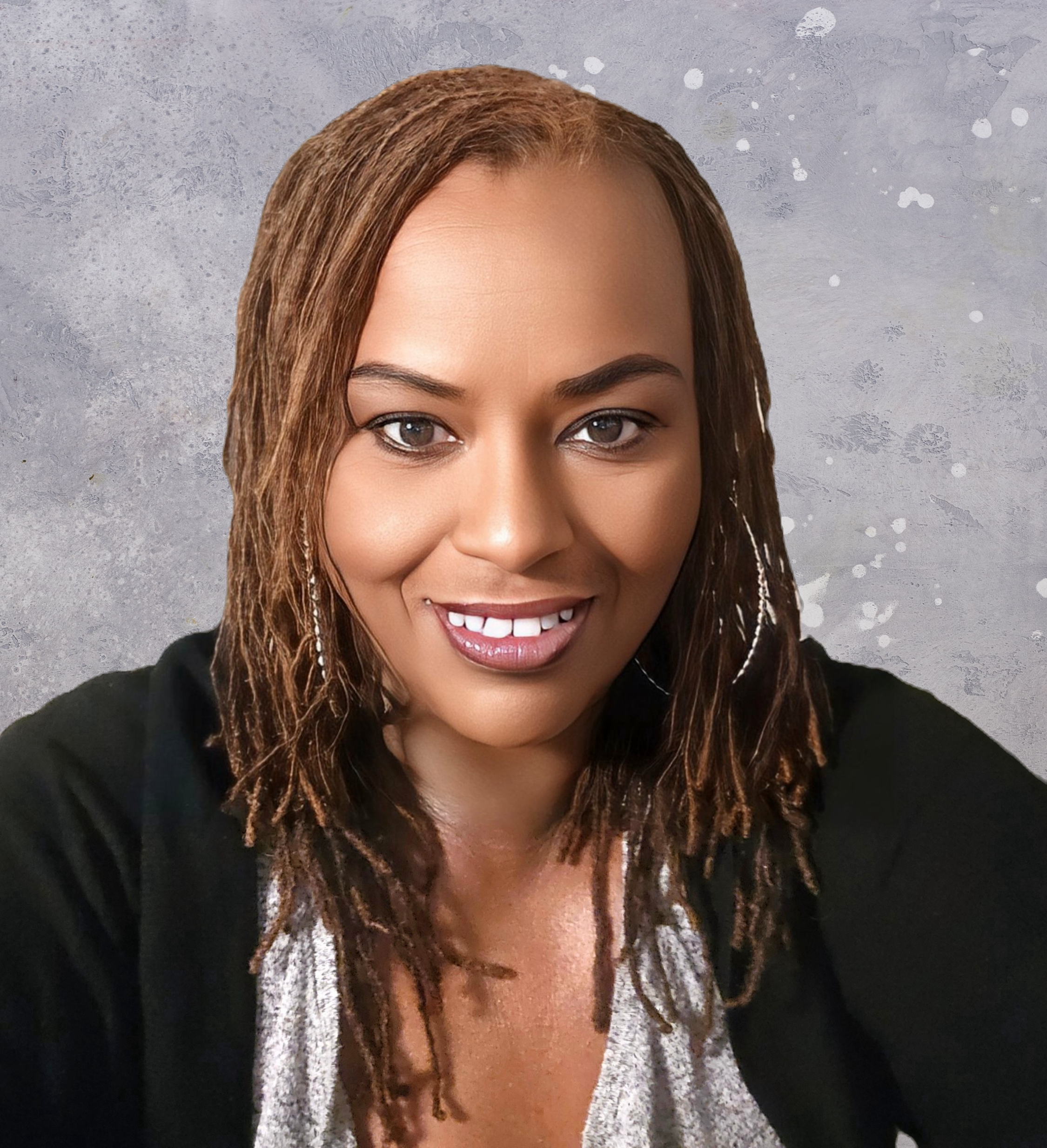
A Note from Dr. Andrea Long-Nelson
CEO & Founder, B.E.A.M. Education | Educational Director, B.E.A.M. Microschool Academy | drandrealong-nelson.com
We are dreamers, creators, innovators, change agents, believers in the impossible, and educational entrepreneurs. We have a strong sense of urgency that the educational landscape must reflect the world our children will inherit. We believe that our collective efforts and collaboration must drive change.
We are committed to creating equitable and inclusive learning environments that empower students with the knowledge and skills to thrive in a 21st-century world. John Lewis' immortal words say it so succinctly: "If not us, then who? If not now, then when?" We must act now to create a brighter future for our students and our society as a whole. We must be the change we want to see.
During the course of my career — as a teacher of grades PK through college, a reading coach, a professional development specialist, a turnaround principal at two high-needs Dallas ISD campuses, and now CEO of B.E.A.M. Education — I have watched this pattern repeat itself. Programs arrive with great fanfare. Community is not at the table. And the families who needed the help most are left behind.
My doctoral research focused on the expertise of campus principals to build teacher capacity and increase student achievement. Out of that research came the Synergy framework — four essential components for high-performing campuses: culture, instruction, data practices, and team effectiveness. Those four pillars are the backbone of B.E.A.M. Microschool Academy. We did not design an institution. We designed an ecosystem. And this time, our community will be at the center of it.